Which details change the comparison? Amelia B. Collins is the editorial byline assigned to this area. Subject: Digital Marketing (Cross-Channel): omnichannel, digital, planning. Background, definitions and the interpretation of available information belong to this editorial remit. This is an editorial pen name used by the publication, not a claim of an independently verified personal identity.
Prepare for five future digital marketing trends: AI assistant discovery, automated campaigns, modeled measurement, retail media and privacy rules. Each gets three preparation steps and a funding gate.
Digital marketing agency trends for 2027: the AI tools agencies run, partner programs, outcome data, causal measurement, auditability, review rules and modular buying.
What Canada's Anti-Spam Legislation requires for commercial email: express and implied consent, sender identification, unsubscribe handling, record keeping and penalties.
Digital marketing agencies rankings in 2027 need checks for scope, eligibility, methods, verification, sponsorship, recency, underlying evidence, and buyer fit.
Digital marketing agencies reviews in 2027 should compare identity, verification, service context, recency, detail, incentives, platform economics, and references.
A paid pilot tests five named lead generation agencies on source provenance, acceptance rules, handoff quality and mature pipeline, not on promised meeting counts.
Digital lead generation tools in 2027 should be compared by capture, data, qualification, routing, activation, measurement, security, governance, and exit.
Learn how to define digital lead generation benchmarks with consistent stages, counts, cost scopes, source quality, response measures, and mature cohorts.
Digital lead generation mistakes include vague stages, hidden sales intent, excessive fields, failed integrations, unowned queues, and raw-lead targets, with fixes.
Common digital lead generation questions in 2027 cover lead definitions, channels, form fields, native forms, qualification, response, email, and metrics.
How to improve digital lead generation in 2027 by repairing stages, self-selection, accessible forms, delivery, qualification, routing, permission, and value.
Compare Optimizely, VWO, AB Tasty and Adobe Target on delivery, assignment, statistics, pricing and exit terms before you commit to any annual contract.
Conversion rate optimization trends for 2027: six signals, from AI assistance and server-side testing to accessibility, choice quality, and reliability.
Online brand building case studies in 2027 reveal patterns in shared infrastructure, official digital homes, governed templates, monitoring, and evidence limits.
Online brand building trends become six cross-channel tests for identity, provenance, AI visibility, creator controls, accessibility, and impersonation.
Seven brand monitoring tools, what each one is for, and the proof method to run before you buy: a labeled mention set, a precision review, an export test and a year-one cost check.
Eight online brand building mistakes, from weak names and unsupported claims to split ownership, inaccessible identity and vanity metrics, each with the first repair to make.
How to improve online brand building by finding trust failures, correcting claims and profiles, and coordinating consistent proof across customer channels.
Judge digital marketing platforms features by mapping each label to an actor, task, input, output, failure, owner, and measurable outcome before you buy.
A side-by-side digital marketing platforms comparison of HubSpot, Brevo, Mailchimp and Zoho, with the criteria that decide which to keep and which to drop.
Omnichannel marketing tools in 2027 should be compared on use-case fit, identity, preferences, channels, accessibility, permissions, cost, recovery, and exit.
Six omnichannel marketing trends for 2027, each with a bounded test, then the full opt-out propagation test across channels, vendors and state signal rules.
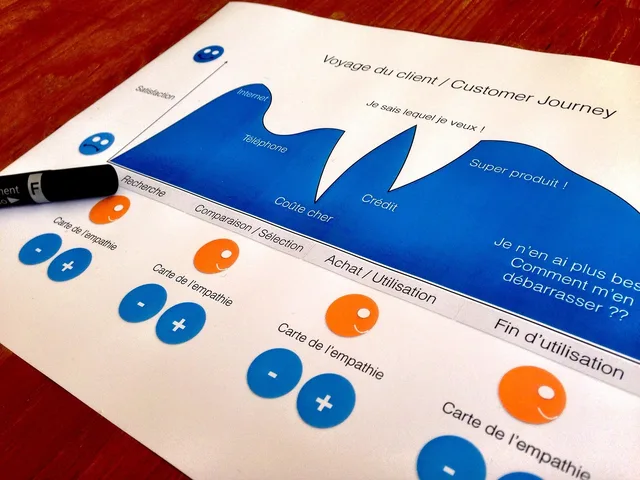
Digital customer journeys best practices for cross-channel planning: map goals, channel handoffs, evidence, accessibility, privacy, recovery, and outcomes.
Digital customer journeys benchmarks in 2027 require matched steps, populations, entry rules, time limits, accessibility, outcome maturity, costs, and baselines.
A digital customer journeys checklist that maps frontstage and backstage work, tests accessibility, and keeps data collection justified at every handoff.
Digital customer journeys mistakes in 2027 include channel-first maps, invented intent, inaccessible steps, weak handoffs, coercion, and ignored recovery.
Common digital customer journeys questions in 2027 cover boundaries, funnels, data, research, ownership, accessibility, handoffs, failure, recovery, and reviews.
How to improve digital customer journeys in 2027 through research, mapping, evidence, accessibility testing, handoff repair, recovery design, and outcome review.
Best digital marketing campaigns agencies in 2027 are compared through customer fit, named teams, evidence quality, pricing, controls, ownership, and a paid pilot.
Digital marketing campaigns best practices for planning campaign tests, reconciling platform metrics with business outcomes, and recording reusable decisions.
Assess digital marketing campaigns tools across ad serving, cross-channel journeys, and CRM records using eligibility, creative, attribution, and exit tests.
How to compare digital marketing campaigns benchmarks: match metric definitions, peer groups, outcome windows and controlled baselines before you use them.
Six planning models for software activation, ecommerce launches, local demand, B2B evaluation, marketplace balance, and membership renewal, plus tests and guardrails
A decision framework for choosing digital marketing strategy tools: criteria, scoring steps, governance checks and contract terms before you read any ranked shortlis
The four pricing tiers of digital marketing strategy tools, what each adds in seats, approvals and connectors, and what a mid tier team actually pays per year.
Price seats, integration overhead, and contract terms before 2027. A cost-focused comparison of digital marketing strategy tools and a four-tool stack example.
Two digital marketing strategy case studies turned into local tests: social approvals and journey diagnosis, with a baseline, a loss limit and your own records.
Digital marketing strategy best practices assign distinct channel jobs, align claims and journeys, protect privacy, and measure customer and business outcomes.
A practical guide to digital marketing strategy benchmarks: define metrics, check named sources and peer groups, set internal baselines, and investigate outliers.
Omnichannel digital planners can compare Chicago B2B and retail channel mix with Austin tech and startup channel mix, then adjust budgets and creative.
Omnichannel digital planning across the US and Canada means reconciling PIPEDA, CASL, CCPA and CPRA into one campaign plan that holds up in both markets.
A practical overview of omnichannel digital planning agency fee models, media commissions, platform add-ons, and questions to ask when comparing proposals.
Omnichannel digital planning under five state privacy laws: dates, coverage tests, cure periods, enforcers and penalties, then four owned layers to run it.
Digital customer journeys in 2027 connect customer intent, channels, owned experiences, handoffs, service states, accessibility, evidence, economics, and fixes.
A digital marketing strategy framework: name the customer decision, give each channel one job and stop rule, set measurement, and run a ninety day operating cycle.