Reviews
Part of Reading digital customer journeys with a sceptical eye
Digital customer journeys best practices across channels
Digital customer journeys best practices for cross-channel planning: map goals, channel handoffs, evidence, accessibility, privacy, recovery, and outcomes.
What to take away
- Start from a verified customer goal and service outcome, then map states, evidence, operations, failure, and recovery.
- Use analytics to locate questions and research or testing to explain causes without inventing intent.
- Remove inaccessible and manipulative choices, minimize data, repair handoffs, and measure durable customer value.
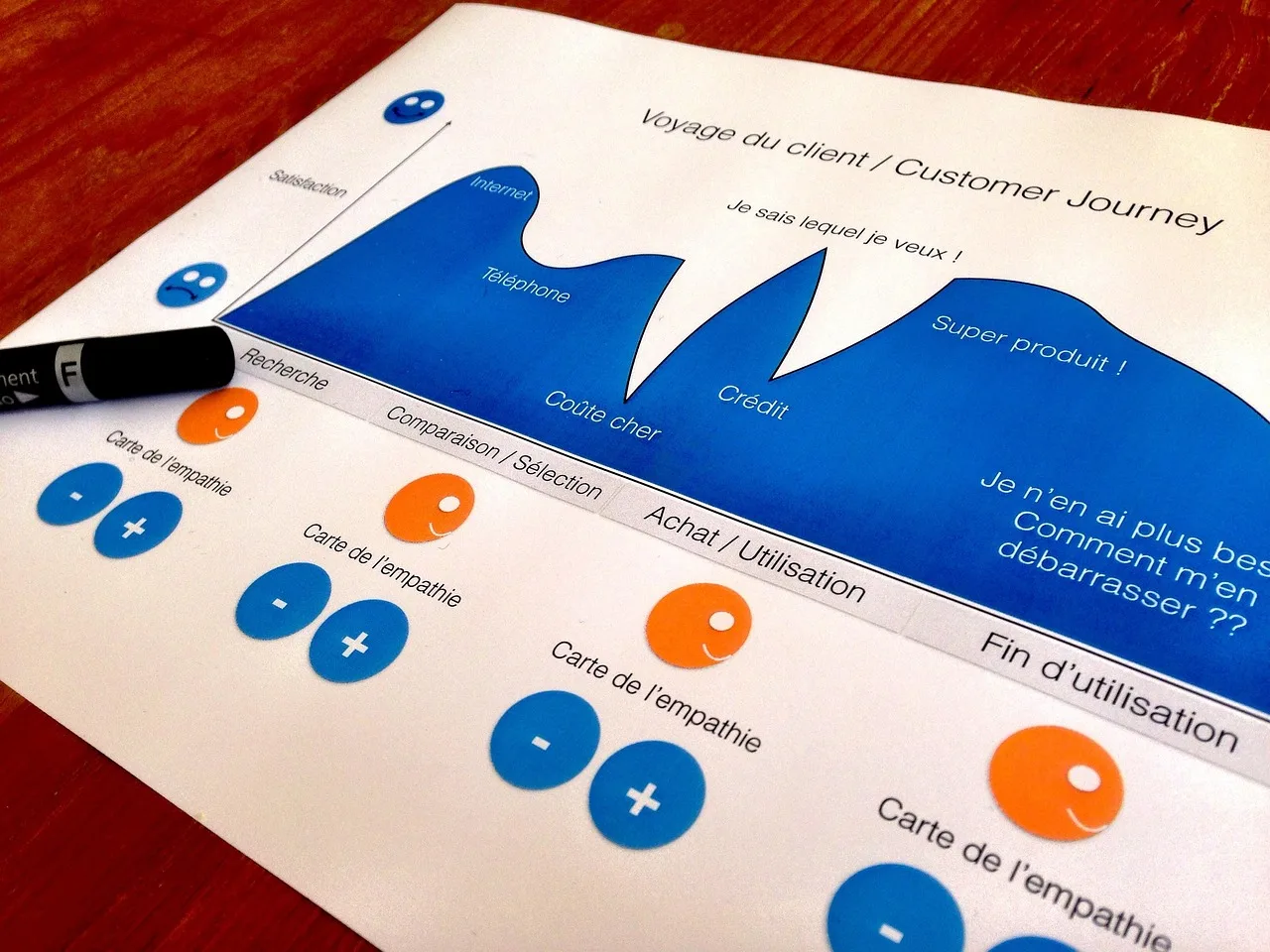
Digital customer journeys best practices connect a person's goal with the systems and people responsible for delivery. For omnichannel planning, map the goal across website, mobile app, email, SMS, paid media, call center, and retail; a customer journey map records customer-facing steps, while a service blueprint connects them to the people and systems delivering them. Start with one actor and scenario, define observable customer states, and use research to explain the experience. Treat analytics as recorded behavior under specific settings.
Apply best practices by channel
Website
Keep the primary task and next step clear, and preserve progress when customers move through authentication, checkout, or support. Confirm completed actions, make errors understandable and recoverable, and test the experience with assistive technology.
Mobile app
Link notifications and campaigns to the exact in-app task or status they refer to. Make progress and recovery options visible, respect notification preferences, and avoid requiring an app when the customer can complete the task another way.
Trigger messages from verified customer or service states, and make the subject and call to action match that state. Suppress messages that are no longer relevant after a purchase, resolution, or opt-out, and make preferences and unsubscribe options easy to find.
SMS
Use SMS for concise, timely updates or actions that fit the customer's permissions and preferences. Identify the sender, give a clear next step when needed, and stop or update messages when the underlying state changes or the customer opts out.
Paid media
Make the ad and landing page consistent in message and next step. For acquisition campaigns, suppress audiences that have already completed the intended conversion where the available data and permissions allow; use frequency caps to limit repeated exposure, and evaluate results against the campaign outcome rather than clicks alone.
Call center
Give agents access to the relevant service status and prior interactions, subject to access controls, so customers do not have to repeat the same information. Verify identity before disclosing or changing account details, record the call outcome, and update the journey state so resolved cases do not trigger redundant outreach.
Retail
Help associates access relevant order, inventory, and service information when authorized. Keep store and digital steps consistent for tasks such as returns, and provide a clear fallback when a system or handoff is unavailable.
Resolve identity and coordinate contact
Set documented rules for linking records across channels. Prefer authenticated accounts or reliable first-party identifiers, avoid merging people based only on weak signals, and keep records separate when identity is uncertain. Apply the customer's permissions and channel preferences across connected systems, and propagate opt-outs so a request made in one channel is respected in others.
Use shared customer states to coordinate contact: suppress messages after the customer completes the task, resolve conflicting messages before sending, and cap total frequency across channels where systems allow. Define which channel or team owns the next action, and assess attribution with the available exposure and outcome evidence while recording its limitations.
Treat accessibility as a service requirement
The GOV.UK Service Manual explains understanding WCAG and the need for accessibility across a service, including research, design, development, testing, and ongoing work. For U.S. services, assess obligations under the Americans with Disabilities Act (ADA) and, for covered federal agency information and communication technology, Section 508 of the Rehabilitation Act. WCAG 2.2 Level AA is a technical accessibility target, not itself a U.S. statute; applicable requirements depend on the service and organization.
Define actor, trigger, and journey boundary
Name the role, trigger, goal, current alternative, constraints, and journey boundary. Use a current-state customer journey map to capture the actor's scenario and a future-state map to describe the intended experience; a service blueprint can connect both to operations. Separate users, buyers, approvers, recipients, and administrators when their questions and authority differ. Nielsen Norman Group discusses journey mapping.
Define states with authoritative evidence
For each state, record entry, exit, source, owner, duration, exceptions, and allowable communication. Prefer product, transaction, fulfillment, or service evidence over one page view. Use state definitions to prevent acquisition messages after purchase and to identify stalled or unresolved customers. Teams that define states this way often still have unanswered digital customer journeys questions about ownership and handoffs.
Illustrative cross-channel map: a customer starts a damaged-item return on a retailer's website or app, receives a label by email, hands the package to a carrier, and contacts the retailer's support team if tracking stalls. States run from return started to label issued to item shipped to refund pending to refund issued. The handoff is the carrier scan reaching the retailer system; if it fails, the customer uploads a receipt and support approves the refund manually. Refund issued is the service outcome to track.
Combine methods and expose limits
Use interviews, observation, usability, event paths, transactions, service contacts, refunds, and accessibility tests. Sample successful and failed journeys. Save date, population, configuration, confidence, and limitation. Mark direct evidence, interpretation, and hypothesis separately, and never invent customer quotations or emotions.
Read paths from meaningful outcomes
Recorded paths can be explored forward or backward under chosen settings. Compare successful and unsuccessful groups, then confirm suspected loops or friction with research, testing, service evidence, and technical diagnosis. In Google Analytics 4, use event_name, event_timestamp, user_pseudo_id, session_id, transaction_id, item_id, and value to rebuild successful and failed paths.
Design for access and informed choice
Test navigation, media, authentication, forms, payment, confirmation, support, returns, and cancellation. Include third-party components, assistive technology, manual review, relevant users, and clear noncoercive choices.
Connect frontstage and backstage work
Map people, policies, data, vendors, queues, approvals, inventory, payment, fulfillment, and service behind every customer step. Assign owner, expected time, failure mode, escalation, fallback, and recovery communication. Repair the dependency instead of adding another message around it.
Decision table
| Practice | Evidence | Review question |
|---|---|---|
| Goal | Research and service outcome | Is this customer progress? |
| Task | Accessibility and usability test | Can people complete it? |
| Choice | Claim and consent review | Is the decision free and clear? |
| Handoff | Queue and context record | Does responsibility transfer? |
| Recovery | Failure exercise | Can the state be repaired? |
Review the journey for dark commercial patterns
The OECD report Dark Commercial Patterns examines practices in online interfaces that steer, deceive, coerce, or manipulate consumer choices. For U.S.-facing journeys, the Federal Trade Commission Act (FTC Act) prohibits unfair or deceptive acts or practices, which can apply to dark patterns. Review the actual journey and obtain current market-specific advice.
Measure and govern outcomes
Track task success, time, effort, error, recovery, fulfillment, first value, retained value, refunds, complaints, and customer outcomes. Set review cadence according to risk, service needs, and the speed of decisions.
Set thresholds from the service target and observed baseline. Investigate handoffs that miss the target and tasks that show persistent success or recovery problems. Preserve evidence, experiments, changes, limitations, owners, and decisions.
The NIST Privacy Framework starting guide outlines a voluntary process for identifying and managing privacy risk. For U.S. journeys, assess whether the California Consumer Privacy Act (CCPA), as amended by the California Privacy Rights Act (CPRA), applies, and consult the California Privacy Protection Agency's guidance. Use the framework to assign data and response owners; it is not legal clearance.
The CISA business-system logging guidance explains how event records support security review. Preserve appropriate digital customer journeys best practices access, change, failure, and correction records without claiming that logging validates a metric.
Common questions
What is the strongest customer journey best practice?
Define a real customer goal and durable service outcome, then make every state, handoff, data use, safeguard, failure, and recovery answerable to it.
How should teams use path analytics?
Use it to identify patterns and questions under a saved configuration. Confirm suspected causes with research, task testing, service evidence, and technical diagnosis.
Why include recovery in the main journey?
Errors and exceptions are normal. Recovery determines whether customers can correct input, regain access, receive support, reverse a decision, and reach the intended state.