Strategy
Part of Digital marketing campaigns: the parts worth your attention
Digital marketing campaigns examples: what strong ones do differently
Six planning models for software activation, ecommerce launches, local demand, B2B evaluation, marketplace balance, and membership renewal, plus tests and guardrails
What to take away
- Every example begins with a customer decision and operating constraint, not a channel format.
- Offers, evidence, destinations, and handoffs change by decision stage and business model.
- Use these examples as planning hypotheses, then validate claims, access, economics, and customer outcomes locally.
- Strong examples name the customer decision and the proof; weak ones name a channel and a slogan.
Digital marketing campaigns examples are most useful when they show the customer decision, channel roles, destination, and evidence. These six examples are hypothetical planning models, not performance claims. Adapt the offer, claims, budget, accessibility, privacy, capacity, and economics to local customer evidence.
What separates strong campaigns from weak ones
Strong digital marketing campaigns examples start with a customer decision and a proof. Weak ones start with a channel and a slogan.
Dropbox's 2008 referral program offered extra storage to both parties. It matched the decision to store more files, and grew from 100,000 to 4 million users in 15 months.
Dollar Shave Club's 2012 video cost about $4,500. It sent viewers to a $1-per-month subscription page and gained 12,000 subscribers in 48 hours.
Old Spice's 2010 "The Man Your Man Could Smell Like" promised a better-smelling man, then proved it with 186 personalized video responses in two days. Body wash sales rose 107% in the month after launch.
Red Bull Stratos in 2012 measured 8 million concurrent live stream viewers and 52 million total views. It also tracked brand lift.
Spotify Wrapped 2021 reported more than 60 million shares. The annual campaign has a clear season and end date.
Always "#LikeAGirl" (2014) used a clear social message and earned over 90 million views. It also labeled the brand sponsorship.
Weak campaigns skip the proof. They run a generic "like us" post, send paid traffic to a homepage, measure impressions, and run with no stop rule.
Disclose creator and brand relationships clearly
The FTC's Disclosures 101 guidance for social media influencers says material relationships should be disclosed clearly and conspicuously with the endorsement itself. Apply current qualified review to the real platform, market, format, and relationship.
1. Software activation campaign
Target suitable trial users who have not reached first value. Use an in-product prompt, expected email, a short demonstration, and contextual help. Measure eligible users, first value, retained use, support, conversion, and complaints. Suppress people after success or a stated preference change.
2. Ecommerce product launch
Coordinate disclosed creator demonstrations, product-led search, a usable product page, availability email, and bounded paid media. Make price, delivery, returns, limitations, and stock clear.
Measure qualified visits, completed orders, contribution, refunds, and reviews; track repeat purchase, inventory, and support load. Even well-run campaigns raise recurring questions about boundaries, timing, and channel count, so review the common digital marketing campaigns questions.
3. Local service demand campaign
Use accurate listings, location-specific service pages, qualified search ads, referral partners, and a usable booking path. State the service area, credentials, pricing basis, availability, and exclusions. Measure suitable inquiries, attended appointments, accepted work, value, cancellations, capacity, and source quality.
4. B2B evaluation campaign
Offer a transparent evaluation resource for a defined buying group, distribute it through search, professional channels, relevant partners, and account outreach, then provide sales help for security, integration, and procurement. Measure accepted accounts, engaged roles, opportunity quality, cycle, wins, implementation, and retained revenue.
5. Marketplace balance campaign
Recruit supply only where demand is constrained, or stimulate demand only where suitable supply exists. Use separate messages and destinations for each side. Measure successful exchanges, time to match, quality, cancellations, safety, support, repeat use, geography, and unit economics rather than total signups.
6. Membership renewal campaign
Reach eligible members before expiration with a record of received value, current terms, accessible renewal path, and appropriate assistance. Use expected email, account messages, and service outreach. Measure completed renewals, retained participation, payment failures, downgrades, opt-outs, complaints, and support demand.
Turn the example into a test
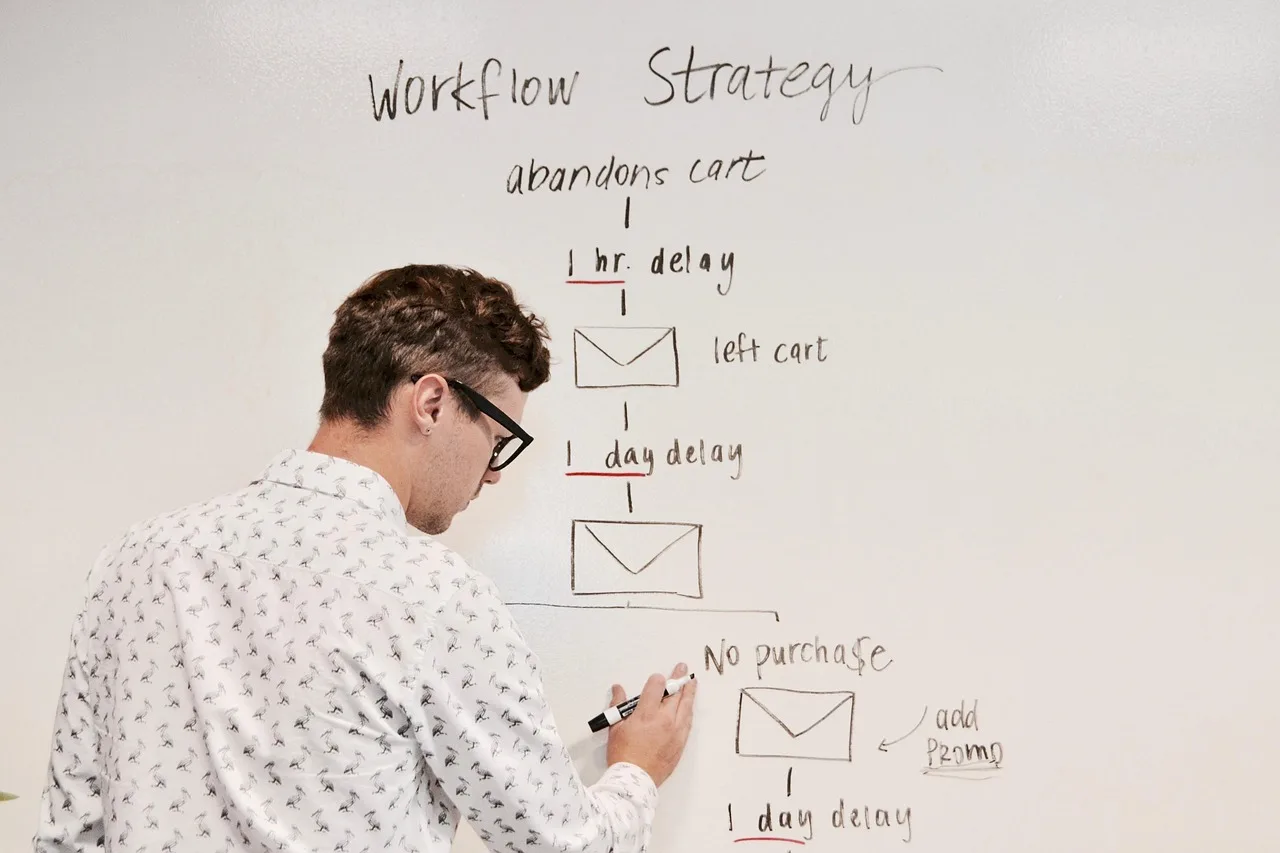
Define the audience condition, decision, promise, proof, offer; set channel jobs, destination, handoff, full cost, primary outcome; set guardrails, attribution rule, and stop decision. Tag campaigns consistently and verify the journey before launch.
Campaign test setup checklist
- Define audience condition and decision
- Set promise, proof, and offer
- Assign channel jobs and destination
- Set handoff and full cost
- Set primary outcome and guardrails
- Set attribution rule and stop decision
- Tag campaigns and verify journey
Start with a bounded budget and preserve the baseline for comparison. Before locking the plan, confirm digital marketing strategy checklist covers customers, channel roles, measurement, and sign-off.
Decision table
| Business model | Primary decision | Guardrail |
|---|---|---|
| Software | Reach first product value | Support and retention |
| Ecommerce | Complete a suitable order | Margin and returns |
| Local service | Book an eligible visit | Capacity and attendance |
| B2B | Enter a qualified evaluation | Sales acceptance |
| Marketplace | Complete a safe exchange | Balance and quality |
| Membership | Renew with understood terms | Participation and complaints |
Build a usable conversion form
W3C's accessible forms tutorial covers labels, instructions, validation, notifications, grouping, and multi-page form progress. Apply the current standard and test the full campaign action with representative users and devices.
Turn examples into test cases
The NIST Privacy Framework starting guide outlines a voluntary process for identifying and managing privacy risk. Use it to assign data and response owners for digital marketing campaigns examples; it is not legal clearance.
The W3C information and relationships explanation says visual structure and relationships should also be programmatically available. Apply that check to digital marketing campaigns examples outputs, then test the actual page with the users and technology in scope.
Common questions
Are these campaign examples performance benchmarks?
No. They are hypothetical operating models. Set local baselines, costs, capacity, outcome definitions, and guardrails before testing them.
Can the same example be copied into another industry?
Only the decision logic may transfer. Rebuild the customer facts, claim evidence, channel roles, destination, legal review, economics, and safeguards.
What makes a campaign example useful?
It identifies the customer condition, decision, promise, proof, offer, channels, destination, handoff, outcome, cost, risk, and stop decision.
What separates a strong campaign example from a weak one?
A strong example names the customer decision, the promise, the proof, the destination, and the measured outcome. A weak one names a channel and a slogan, then measures impressions.